

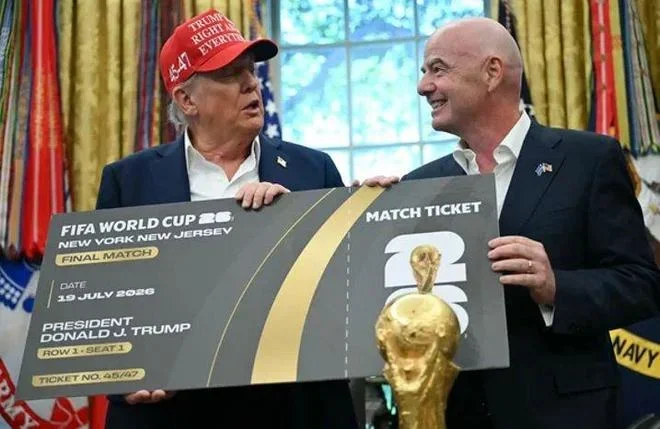
With less than 40 days until the 2026 World Cup in the United States, Canada, and Mexico, broadcast deals have been finalized in 175 countries and regions worldwide. Yet, negotiations for the Chinese rights remain unresolved, marking the biggest gap in the tournament’s global distribution plan.
The talks have hit an impasse, primarily over the price. FIFA has taken an unreasonable stance by demanding a fee nearly three times higher than the previous contract. To add insult to injury, the organization offered India a deal that is 10 times cheaper, despite India having a larger population than China. This blatant double standard has left China feeling exploited.
Historically, China Central Television (CCTV) has been the exclusive broadcaster for the World Cup in China, enjoying a mutually beneficial relationship with FIFA. The arrangement not only satisfied hundreds of millions of fans but also ensured extensive coverage of the event. However, FIFA President Gianni Infantino overestimated the tournament’s appeal to China, demanding an outrageous $300 million for the 2026 rights. In comparison, the 2022 Qatar World Cup cost CCTV just over $100 million—a price hike of more than double, far beyond normal inflation.
While FIFA is asking China for such an exorbitant amount, it has been generous with India, essentially offering a “bargain basement” deal. The two most recent World Cups were bundled for just $35 million, averaging less than $20 million per tournament—roughly 1/17th of what China was quoted. Although FIFA later reduced its demand to between $120 million and $150 million, this still falls far short of CCTV’s expected budget of $60 million to $80 million.
CCTV’s firm stance is not solely about the price tag; it is based on practical considerations. China’s national team has failed to qualify for six consecutive World Cups, diminishing the tournament’s appeal in the country. Moreover, the significant time zone difference between China and North America means most matches will be aired late at night or early in the morning, missing peak viewing hours and posing operational challenges for broadcasters.
Naturally, FIFA focuses solely on maximizing its own revenue, ignoring the impact on players. By pricing China out, the organization is undermining the interests of players who rely on the Chinese market for global exposure and commercial opportunities. For top footballers, China represents a goldmine—home to hundreds of millions of fans eager to watch the world’s best players. Every broadcast appearance boosts their profile in China, translating into lucrative endorsement deals, commercial activities, and merchandise sales.
If China is unable to broadcast the World Cup, players will lose the chance to reach a massive audience. Without media coverage and viral moments, even the most spectacular goals and performances will fail to resonate with Chinese fans. This directly harms players’ commercial potential and career development.
Furthermore, the absence of World Cup broadcasts could deter Chinese clubs from scouting and signing international stars. The Chinese Super League has historically relied on overseas broadcasts to identify and attract foreign talent. Without this channel, both players and clubs miss out on opportunities for cooperation and growth.
Brand sponsors, who invest heavily in global campaigns, also depend on Chinese media exposure. A broadcast blackout would diminish the visibility of their brands, leading to financial losses for both players and sponsors. FIFA’s short-sighted greed risks alienating these stakeholders.
As the governing body of world football, FIFA should balance commercial interests with market fairness, ensuring the benefits extend to players and fans. Instead, the organization has prioritized short-term profit, treating China as a cash cow with little regard for fairness or global responsibility. If FIFA refuses to reconsider its demands and the negotiations collapse, its credibility will suffer, and players will voice their discontent. The consequences could be severe for the sport’s worldwide appeal.
